
Pediatric care plays a central role in keeping children healthy from infancy through the teen years, yet many parents are unsure what it truly includes or when it is needed. For families in Spokane, understanding pediatric care is especially important because children’s health needs can change quickly due to school exposure, seasonal illnesses, and active lifestyles. Pediatric care focuses on medical services created specifically for growing bodies and developing minds, not scaled-down adult care.
Pediatricians are trained to recognize early signs of illness, guide healthy development, and support parents through each stage of childhood. Knowing what pediatric care involves helps parents make better decisions about routine visits, urgent concerns, and when specialized care is needed. This guide explains pediatric care in simple terms so Spokane parents feel informed and confident when choosing care for their children.
What Is Pediatric Care?
Pediatric care is a branch of medicine dedicated to the health and well-being of children from birth through adolescence and, in some cases, young adulthood. It focuses on physical growth, emotional wellness, and developmental milestones that occur as children grow. Pediatric care includes preventive services, illness treatment, and guidance for parents on nutrition, safety, and behavior. Unlike adult medicine, pediatric care considers how diseases, medications, and injuries affect developing bodies differently at each age. Infants, toddlers, school-age children, and teens all have unique medical needs that change over time.
Who Is a Pediatrician?
A pediatrician is a medical doctor who specializes in caring for infants, children, and teenagers. After completing medical school, pediatricians receive several years of additional training focused entirely on child health, including growth patterns, childhood diseases, and developmental changes. This training allows pediatricians to understand how symptoms may appear differently in children compared to adults.
Pediatricians also learn how to communicate with children at different ages and how to guide parents through health decisions. Unlike family medicine doctors who treat all age groups, pediatricians focus only on children, giving them deeper insight into pediatric conditions. Their role includes diagnosing illness, managing ongoing health concerns, and offering guidance on healthy development.
What Services Does a Pediatrician Provide?
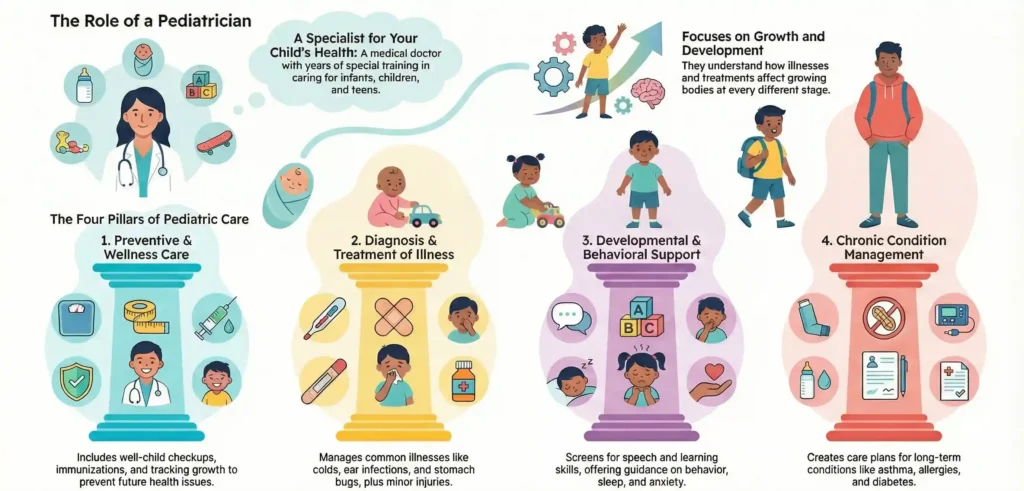
Pediatricians offer a wide range of services that support children’s health from infancy through adolescence. These services include preventive care, treatment of illness, developmental monitoring, and support for chronic conditions. Pediatricians help families understand what is normal for a child’s age and what may require attention. They also guide parents on safety, nutrition, sleep, and emotional well-being. Pediatric care is designed to address both immediate medical needs and long-term health goals. By building ongoing relationships with families, pediatricians are able to track changes over time and identify concerns early. This comprehensive approach helps reduce serious health issues later in life.
Preventive and Wellness Care
Preventive and wellness care is one of the most important roles of a pediatrician. Regular well-child checkups allow pediatricians to monitor growth, weight, and developmental progress while addressing concerns before they become serious. These visits include routine immunizations that protect children from preventable diseases and help keep schools and communities healthier. Pediatricians also track speech, motor skills, and social development to ensure children are meeting age-appropriate milestones. Parents receive guidance on nutrition, sleep routines, injury prevention, and screen time. Preventive care builds a strong health baseline and helps children avoid illness whenever possible.
Diagnosis and Treatment of Illness
When children become sick or injured, pediatricians provide accurate diagnosis and timely treatment. Common childhood illnesses such as ear infections, colds, flu, sore throats, and stomach bugs are frequently managed in pediatric care settings. Pediatricians also treat minor injuries, including sprains, mild burns, and small cuts. Because children cannot always describe symptoms clearly, pediatricians are trained to recognize subtle signs of illness. They choose medications and treatments that are safe for a child’s age and size. Pediatricians also help parents understand what symptoms to monitor at home and when follow-up care is needed.
Development, Behavioral, and Social Support
Pediatric care goes beyond physical health by supporting a child’s emotional, behavioral, and social development. Pediatricians perform developmental screenings to assess speech, learning, and motor skills at key ages. They also help identify behavioral concerns such as attention difficulties, anxiety, or sleep problems. Parents often rely on pediatricians for guidance on discipline, school readiness, and social challenges. These conversations provide reassurance and practical advice during stressful stages of parenting. Early identification of developmental concerns allows families to seek support sooner, improving long-term outcomes.
Chronic Condition Management
Many children live with chronic health conditions that require ongoing care and monitoring. Pediatricians manage conditions such as asthma, allergies, diabetes, and other long-term concerns through structured care plans. These plans include regular follow-ups, medication adjustments, and education for families on managing symptoms at home. Pediatricians also coordinate care with specialists when needed and help families understand treatment options.
Consistent monitoring helps reduce flare-ups, emergency visits, and school absences. For Spokane families, effective chronic condition management means children can stay active, attend school regularly, and enjoy daily life with fewer disruptions. Pediatricians play a key role in supporting both children and parents through long-term health challenges with clarity and consistency.
Why Pediatric Care Matters More Than Just Doctor Visits
Pediatric care plays a lasting role in a child’s overall health and future well-being, far beyond treating illnesses as they appear. Pediatricians track growth patterns, development, and health trends over time, which helps identify concerns early and reduce long-term risks. Early detection of conditions such as asthma, vision problems, developmental delays, or nutritional deficiencies allows treatment to begin before issues worsen. Pediatric care also focuses strongly on prevention through vaccinations, safety guidance, and health education for parents. This support helps families make informed choices at home, from sleep routines to injury prevention. For caregivers, pediatricians serve as trusted partners who answer questions, provide reassurance, and help manage the challenges of raising healthy children.
When Should Your Child See a Pediatrician?
Knowing when to schedule a pediatrician visit helps parents respond calmly and effectively to health concerns. Routine checkups are recommended at regular intervals to monitor growth, development, and overall health, even when a child appears well. These visits support prevention and early intervention. Pediatricians should also be seen for ongoing symptoms such as persistent cough, ear pain, frequent infections, or concerns about development or behavior. Urgent issues like sudden fever, vomiting, or minor injuries may require same-day care, which could be handled by urgent care if the pediatric office is unavailable. Emergency care is necessary for serious symptoms such as breathing trouble, seizures, or severe injuries.
How to Choose the Right Pediatrician in Spokane

Choosing the right pediatrician in Spokane is an important decision that affects your child’s health for years. Parents should look for board-certified pediatricians who have completed specialized training in child health. Experience with children of similar ages and health needs is also helpful.
Communication style matters, as parents should feel comfortable asking questions and discussing concerns openly. Practical factors such as office location, hours, and appointment availability can make a big difference during busy schedules. Insurance acceptance and clear billing policies help reduce stress for families. It is also helpful to ask about after-hours support and coordination with urgent care services. In Spokane, finding a pediatrician who aligns with your family’s needs creates a strong foundation for consistent, reliable care throughout childhood.
Frequently Asked Questions About Pediatric Care
Parents often have practical questions about pediatric care as their children grow and their needs change. Below are common questions that help families make informed decisions.
What age does pediatric care cover?
Pediatric care typically begins at birth and continues through adolescence, often up to age 18 or 21, depending on the provider.
Do pediatricians perform surgery?
Pediatricians do not perform surgery. They diagnose conditions and refer children to pediatric specialists or surgeons when needed.
How often should a child have wellness visits?
Wellness visits are frequent in infancy and early childhood, then usually once a year during school-age years and adolescence.
Can pediatricians help with school or behavior concerns?
Yes, pediatricians assess developmental progress and guide families on learning, behavior, and emotional health concerns.
What should parents bring to a pediatric visit?
Parents should bring immunization records, medication lists, insurance information, and any questions or observations about their child’s health.
