

Parents in Spokane often ask when it makes sense to schedule a pediatrician visit and when care can safely wait. Understanding the common reasons for visiting a pediatrician in Spokane helps families respond early, reduce stress, and avoid last-minute decisions. Children’s health needs change quickly due to growth, school exposure, sports, and seasonal illness patterns common in Eastern Washington. Pediatricians focus on routine care, prevention, and ongoing health concerns, while urgent care and emergency services address sudden or severe problems.
Knowing the difference helps parents choose the right care at the right time. This guide explains why Spokane families commonly visit pediatricians, what symptoms deserve attention, and how pediatric care supports children at every stage. Clear information builds confidence and helps parents protect their child’s health through consistent, informed medical care.
Why Do Children in Spokane Commonly Need Pediatric Care?
Children in Spokane face health needs shaped by climate, community, and lifestyle. Seasonal changes often bring waves of colds, flu, and respiratory infections, especially during school months when close contact spreads illness quickly. Pediatric care also supports steady growth and development, which requires regular monitoring as children move from infancy to adolescence. Many Spokane children participate in sports and outdoor activities, increasing the need for physical exams and injury prevention guidance.
Preventive care, such as vaccines and wellness visits, helps reduce missed school days and long-term health risks. Pediatricians also help families manage sleep routines, nutrition, and behavior concerns that often appear during growth stages. Pediatric care remains essential because children’s bodies respond differently to illness and treatment than adults, making specialized, age-focused care necessary at every stage of development.
Key local factors
- Seasonal illness patterns
- Active school and sports schedules
- Growth and developmental milestones
What Are the Most Common Reasons Parents Visit a Pediatrician?
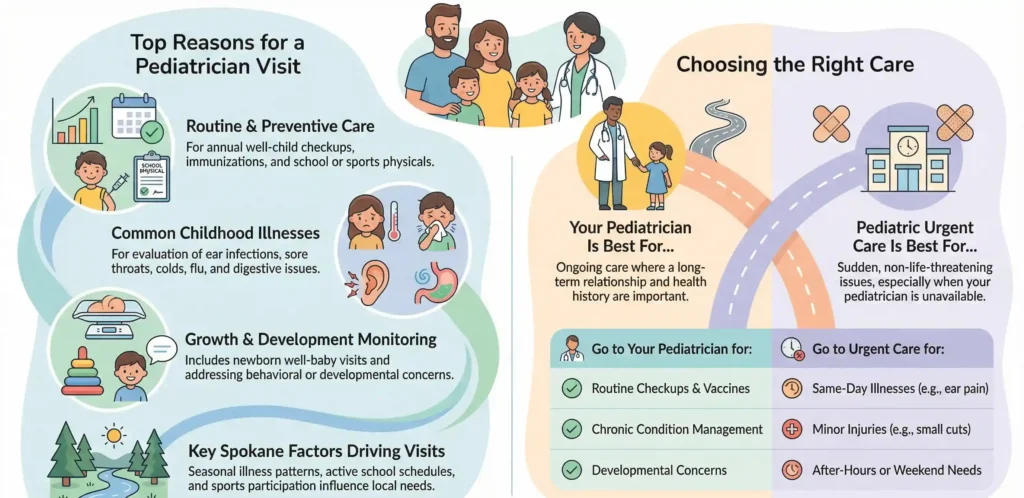
Parents visit pediatricians for a wide range of routine and health-related concerns that support both immediate and long-term well-being. These visits often begin in infancy and continue through the teen years, forming a consistent care relationship. Pediatricians manage preventive care, illness treatment, and developmental monitoring in one setting. Common reasons include well-baby visits, annual physicals, vaccinations, infections, digestive concerns, and behavior-related questions. Many of these issues benefit from early evaluation, which helps avoid complications later.
Pediatric visits also provide parents with guidance and reassurance, especially during uncertain stages of growth. For Spokane families, understanding these common visit reasons helps plan care more effectively and recognize when a pediatrician is the right choice compared to urgent or emergency services.
Newborn and Infant Well-Baby Visits
Well-baby visits are one of the most important reasons parents bring newborns and infants to a pediatrician. These visits focus on tracking growth, weight gain, head size, and early development during the first months of life. Pediatricians guide parents on feeding schedules, sleep patterns, and safe care practices, which is especially helpful for first-time families. Early developmental checks allow providers to monitor reflexes, movement, and social responses.
Pediatricians also answer questions about common infant concerns such as fussiness, spit-up, and feeding challenges. Regular visits help identify potential concerns early, when support is most effective. For Spokane parents, these appointments provide reassurance and reliable guidance during a stage when small changes in health can feel overwhelming.
Annual Well-Child Checkups and Physical Exams
Annual well-child visits help pediatricians monitor a child’s growth and health over time. These checkups include height, weight, vision, and hearing assessments, along with age-appropriate screenings. School and sports physicals are commonly completed during these visits, ensuring children are safe to participate in activities. Pediatricians also review sleep habits, nutrition, physical activity, and emotional well-being.
These visits allow parents to raise concerns that may not seem urgent but still matter, such as fatigue or learning challenges. Preventive screenings help catch issues early, reducing long-term health risks. For Spokane families, consistent annual visits support healthy development, school readiness, and safe participation in sports and outdoor activities throughout the year.
Childhood Immunizations and Vaccine Updates
Immunizations are a common and essential reason for pediatric visits. Vaccines protect children from serious illnesses and help reduce the spread of disease within schools and the Spokane community. Pediatricians follow recommended immunization schedules based on age and health history, ensuring children receive timely protection. During vaccine visits, providers explain benefits, review possible side effects, and address parent concerns clearly.
Staying up to date with vaccines helps prevent outbreaks and protects children who may be more vulnerable. Pediatricians also track immunization records for school and childcare requirements. For families, these visits provide confidence that children are protected and meeting health standards needed for school attendance and community safety.
Common vaccines
- DTaP, MMR, Polio
- Flu and COVID updates
- School-required boosters
Ear Infections and Recurring Ear Pain
Ear infections are one of the most frequent reasons children visit pediatricians, especially during colder months. Symptoms often include ear pain, fever, irritability, and trouble sleeping. Young children may pull at their ears or have difficulty feeding. Pediatricians examine the ears to confirm infection and decide if treatment is needed. Some ear infections resolve on their own, while others require medication. Repeated ear pain may signal fluid buildup or recurring infection that needs closer monitoring. Early treatment helps reduce pain and prevent hearing issues. For parents, understanding when ear pain needs evaluation helps avoid unnecessary discomfort and supports quicker recovery for children.
Common Colds, Flu, and Respiratory Infections
Respiratory illnesses are common among children, especially during fall and winter in Spokane. Pediatricians frequently see children with cough, congestion, fever, and fatigue caused by colds or flu. Most mild illnesses improve with rest and fluids, but pediatricians help determine when symptoms last too long or worsen. They assess breathing, hydration, and fever patterns to rule out complications.
Pediatricians also guide parents on symptom relief and infection prevention at home and school. Early evaluation helps limit the spread of illness and ensures children recover safely. These visits offer reassurance to parents unsure whether symptoms require medical care or can be managed at home.
Sore Throats and Suspected Strep Infections
Sore throats are another common reason parents schedule pediatric visits. While many sore throats are viral, some are caused by strep bacteria and need testing and treatment. Symptoms that may require evaluation include fever, swollen glands, pain with swallowing, and white patches on the throat. Pediatricians perform exams and testing when needed to confirm the cause. Proper diagnosis helps avoid unnecessary antibiotics while ensuring treatment when required. Treating strep promptly helps prevent complications and supports faster recovery. For Spokane families, timely evaluation of sore throats helps children return to school safely and reduces the spread of infection to others.
Digestive Issues Like Vomiting, Diarrhea, or Stomach Pain
Digestive symptoms are common in children and often worry parents. Vomiting, diarrhea, or stomach pain can result from infections, food issues, or stress. Pediatricians assess hydration, pain level, and symptom duration to determine next steps. Signs such as dry mouth, low urine output, or persistent pain may need prompt care. Pediatricians help families manage symptoms at home and decide when follow-up is needed. Early guidance helps prevent dehydration and unnecessary emergency visits. For Spokane parents, pediatric care offers clarity during stomach-related illnesses that can escalate quickly if not monitored carefully.
Warning signs
- Signs of dehydration
- Severe or lasting pain
- Blood in stool or vomit
Behavioral, Emotional, or Developmental Concerns
Behavioral and developmental concerns are common reasons parents seek pediatric care, especially during school years. Pediatricians evaluate attention issues, sleep problems, learning concerns, and emotional changes. They use screenings to track developmental progress and identify areas needing support. Pediatricians also help families address stress, social challenges, and behavior changes related to school or home life. Early support can improve long-term outcomes and reduce frustration for children and caregivers. Pediatricians may refer families to specialists or community resources when needed. For Spokane parents, these visits provide guidance, reassurance, and clear next steps during challenging stages of child development.
When Should You Visit a Pediatrician vs Pediatric Urgent Care in Spokane?
Understanding the difference between a pediatrician and pediatric urgent care helps Spokane parents act quickly and avoid unnecessary stress. Pediatricians are best for routine care, ongoing concerns, and issues that benefit from a long-term relationship. This includes well-child visits, growth and development questions, chronic condition follow-ups, behavioral concerns, and vaccine planning. Pediatric urgent care, on the other hand, handles sudden but non-life-threatening problems faster, especially when same-day appointments are unavailable. Examples include ear pain, sore throats, mild asthma symptoms, minor injuries, vomiting without dehydration, or fever in an otherwise stable child. Knowing where to go saves time, lowers costs, and prevents long waits in emergency rooms. Clear choices also reduce anxiety for parents and help children receive care in the most appropriate setting.
| Best for Pediatrician | Best for Urgent Care |
| Routine checkups | Same-day illness |
| Chronic care | Minor injuries |
| Development concerns | After-hours needs |
Can Pediatric Urgent Care Help When Your Pediatrician Is Unavailable?
Yes, pediatric urgent care plays an important support role when your pediatrician’s office is closed or fully booked. Evenings, weekends, and holidays are common times when children become sick or injured, and waiting days for an appointment may not be practical. Pediatric urgent care is well suited for non-emergency but urgent concerns such as ear infections, sore throats, fevers, rashes, minor cuts, or mild breathing symptoms. These centers are designed to see children quickly without appointments. Importantly, urgent care does not replace your pediatrician. Instead, it fills care gaps and often shares visit summaries or guidance so your child’s regular doctor stays informed. For Spokane families, this teamwork means children get timely care while maintaining continuity with their primary pediatric provider.
How Often Should Children See a Pediatrician at Different Ages?
Visit frequency changes as children grow, but regular pediatric care remains important at every stage. Infants and toddlers need frequent visits during the first years of life to monitor growth, development, and feeding, and to complete immunizations. These visits help catch concerns early when support works best. School-age children typically see a pediatrician once a year for wellness exams, growth tracking, and school or sports physicals. These visits also address learning, sleep, and activity habits. Teens and adolescents still benefit from annual visits focused on physical health, mental well-being, and healthy decision-making. Consistent care helps pediatricians notice trends over time. For Spokane parents, following age-based visit schedules supports prevention and reduces unexpected health problems.
Typical visit schedule
- Infants: multiple visits in the first year
- School-age: yearly
- Teens: yearly or as needed
How Spokane Parents Can Prepare for a Pediatric Visit
Preparing for a pediatric visit helps parents make the most of appointment time. Bringing a list of symptoms, including when they started and what improves or worsens them, gives pediatricians helpful context. Parents should also bring immunization records, medication lists, and insurance information. Writing down questions ahead of time ensures important concerns are not forgotten during the visit. Tracking changes in sleep, appetite, mood, or school performance can provide valuable insight. For younger children, bringing comfort items can help reduce anxiety. Preparation supports clear communication and better care decisions. Spokane parents who come prepared often leave visits with clearer guidance and greater confidence in managing their child’s health at home.
Helpful items to bring
- Symptom notes
- Medication list
- Insurance card
- Questions or concerns
Supporting Spokane Families Beyond the Pediatrician’s Office
Supporting child health extends beyond scheduled pediatric visits. Families benefit from knowing where to go for sudden illness, how to access urgent care, and when emergency services are necessary. Coordinating care between pediatricians and pediatric urgent care helps ensure children receive timely treatment without breaking continuity. Staying informed about seasonal illnesses, vaccines, and preventive steps helps reduce missed school days and complications. Healthy routines at home, including nutrition, sleep, and activity, also play a major role in long-term wellness. For Spokane families, having a clear care plan and understanding local care options builds confidence. With the right knowledge, parents can respond calmly to health concerns and keep children healthy throughout the year.