

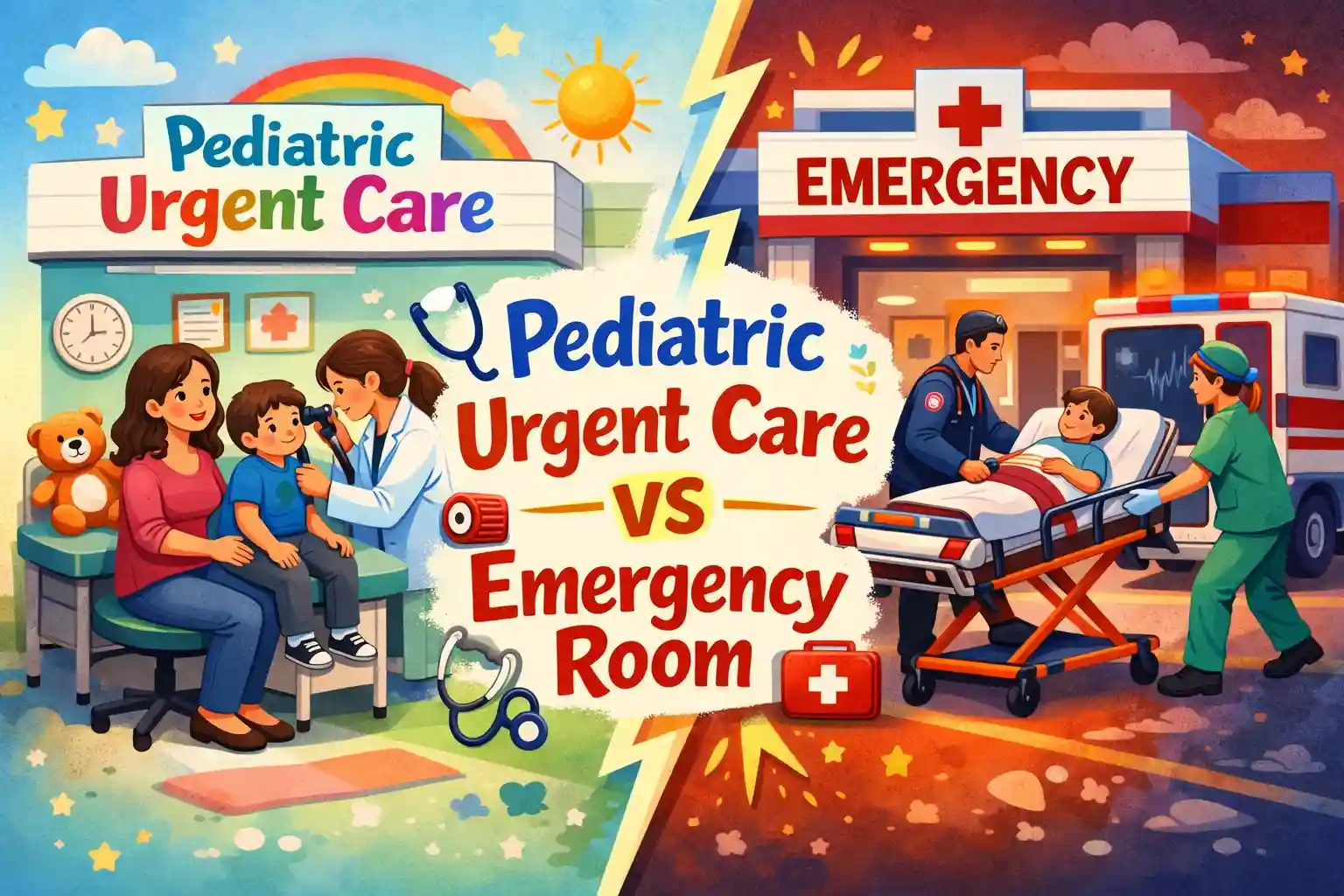
Parents often face stressful decisions when a child becomes sick or injured, especially outside regular clinic hours. One of the most common questions is pediatric urgent care vs emergency room, which option is right for your child? Many families in Spokane search for answers like urgent care vs ER for kids or when to take a child to ER vs urgent care because choosing the wrong setting can mean longer waits, higher costs, or delayed care. Pediatric urgent care exists to fill an important gap between a regular pediatrician’s office and a hospital emergency department. Understanding how these options differ helps parents act quickly and confidently. This guide explains the key differences, common symptoms, and pediatric urgent care benefits so you can make informed choices when your child needs medical attention.
What Is Pediatric Urgent Care And How Is It Different From an Emergency Room?
Pediatric urgent care is a walk-in medical service focused on treating children with non-life-threatening illnesses and injuries that still need prompt attention. These centers are staffed by providers trained in child health and are designed for conditions that cannot wait days for a pediatrician appointment but do not require hospital-level emergency care.
An emergency room, by contrast, is a hospital-based department equipped for critical and life-threatening situations such as severe trauma or breathing failure. Emergency departments have access to advanced imaging, surgery, and specialty teams, which also leads to longer waits and higher costs for minor issues. Pediatric urgent care fits into the healthcare system by offering fast, focused care for common childhood problems while helping emergency rooms stay available for true emergencies.
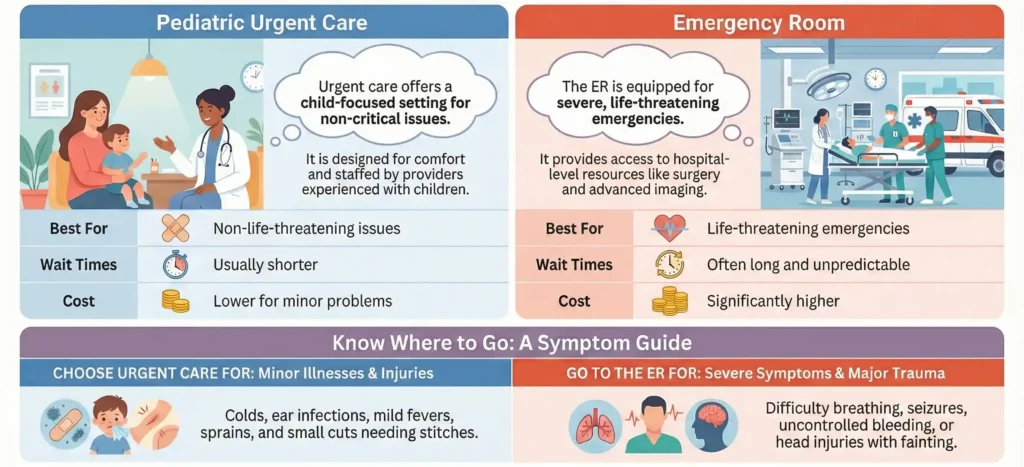
| Feature | Pediatric Urgent Care | Emergency Room |
| Best for | Non-life-threatening issues | Life-threatening emergencies |
| Wait times | Usually shorter | Often long and unpredictable |
| Cost | Lower for minor problems | Significantly higher |
| Setting | Walk-in clinic | Hospital-based |
What Conditions Are Best Treated at Pediatric Urgent Care?
Pediatric urgent care is well suited for many of the health concerns parents deal with regularly. Common minor illnesses include colds, flu symptoms, sore throats, ear infections, sinus infections, and mild fevers in stable children. These centers also handle minor injuries such as sprains, simple fractures, small burns, and cuts that may need stitches.
Many locations offer on-site diagnostic services like X-rays, rapid strep tests, flu testing, and basic lab work, which helps speed up diagnosis and treatment. Parents often search for help with situations like vomiting without dehydration, mild asthma symptoms, skin rashes, or a fever above 100°F when a child is alert and drinking fluids. In Spokane, pediatric urgent care provides timely care for these everyday concerns without the stress of an ER visit.
Common urgent care visits
- Ear pain or sore throat
- Fever in children over 3 months
- Mild asthma flare-ups
- Minor sports injuries
When Should You Choose the Emergency Room Instead?
There are times when the emergency room is the safest and most appropriate choice for a child. Any life-threatening or severe symptom requires immediate hospital care. This includes trouble breathing, blue lips, or a severe asthma attack that does not improve with usual medication. Uncontrolled bleeding, deep wounds, or obvious bone deformities after an injury also need emergency treatment.
Head injuries with loss of consciousness, repeated vomiting after a fall, seizures, or sudden confusion are serious warning signs. Parents should seek emergency care for high fever in very young infants, suspected poisoning, or severe abdominal pain that is constant or worsening. Severe dehydration, shown by very low urine output or extreme lethargy, is another reason to go straight to the ER. These situations need hospital resources that urgent care clinics do not provide.
Go to the ER immediately if your child has:
- Breathing difficulty or chest pain
- Seizures or fainting
- Heavy bleeding that will not stop
- Signs of poisoning
Which Symptoms Make Urgent Care the Right Choice and Not the ER?
Many symptoms fall into a middle ground where pediatric urgent care is the right option. Parents often debate urgent care vs ER for kids when symptoms seem concerning but not severe. Urgent care is appropriate for sore throats, ear pain, persistent cough, or mild fever when a child is stable and responsive. Mild asthma symptoms without breathing distress can usually be managed safely in urgent care.
Minor cuts, pink eye, skin rashes, or small burns are also common reasons to visit. Vomiting or diarrhea without signs of dehydration, such as dry mouth or extreme tiredness, often fits urgent care care as well. For Spokane families, choosing pediatric urgent care for these issues often means faster service, lower cost, and care from providers experienced with children, while keeping emergency rooms available for critical cases.
Urgent care is often right for:
- Ear infections or sore throat
- Mild breathing symptoms
- Small cuts or minor burns
- Stomach upset without severe pain
What Are the Benefits of Pediatric Urgent Care Compared With an ER?
Choosing pediatric urgent care instead of an emergency room offers clear advantages for families dealing with non-life-threatening concerns. Pediatric urgent care centers are built to treat common childhood illnesses and injuries quickly, without the delays often seen in hospital emergency departments. For parents comparing urgent care vs ER for kids, the benefits usually come down to time, cost, and comfort. Emergency rooms must prioritize critical cases first, which can lead to long waits for minor problems.
Pediatric urgent care focuses on walk-in care for children, helping families receive timely treatment while avoiding unnecessary hospital exposure. These centers also help reduce healthcare costs for families and the community. Understanding these benefits helps parents make confident choices while keeping emergency services available for children who truly need hospital-level care.
Why Is Urgent Care Faster and More Cost-Effective?
One of the main reasons parents choose pediatric urgent care is speed. Emergency rooms often have long and unpredictable wait times because they must treat the most severe cases first. Pediatric urgent care centers usually see patients much faster, especially for common issues like ear infections, sore throats, or minor injuries.
Cost is another major difference. Emergency room visits are expensive due to hospital fees, advanced testing, and staffing needs. Urgent care centers charge significantly less for non-severe conditions while still providing quality medical care. For families managing healthcare expenses, this difference matters. Shorter visits also mean less time away from work or school. Together, faster service and lower costs make pediatric urgent care a practical choice for many everyday health concerns.
Key benefits
- Shorter wait times
- Lower out-of-pocket costs
- Efficient treatment for common issues
How Does Pediatric Urgent Care Provide Child-Focused Care?
Pediatric urgent care centers are designed with children in mind, which can make a big difference during stressful visits. Providers and nurses have experience treating infants, children, and teens, so they understand how symptoms present differently by age. Exam rooms often use child-sized equipment and calming designs to reduce fear. This setting helps children feel more comfortable compared to a busy emergency department filled with adult patients and high-intensity activity.
Less noise and crowding can lower anxiety for both children and parents. Providers also communicate in child-friendly ways, explaining procedures clearly and gently. This focused environment supports better cooperation during exams and treatments, leading to a smoother visit overall. For many families, this child-centered approach is one of the most valued pediatric urgent care benefits.
How Can Urgent Care Support Your Pediatrician?
Pediatric urgent care does not replace a child’s regular doctor, but it plays an important supporting role. When a pediatrician’s office is closed during evenings, weekends, or holidays, urgent care offers timely access to care without waiting days for an appointment. Many urgent care centers share visit summaries or recommendations with the child’s primary pediatrician, helping maintain continuity of care.
This communication ensures follow-up is handled appropriately and ongoing conditions are monitored. Urgent care also reduces pressure on pediatric offices by managing sudden illnesses or injuries that need same-day attention. For parents, this support means fewer disruptions and peace of mind knowing care is available when needed. Used correctly, pediatric urgent care works alongside your pediatrician to keep children healthy and safe.
Can Pediatric Urgent Care Replace My Pediatrician?
Pediatric urgent care and a primary pediatrician serve different but complementary roles. A pediatrician provides long-term care, including well-child visits, growth tracking, vaccinations, and management of chronic conditions. Spoken Pediatric urgent care focuses on short-term treatment for sudden illnesses or injuries that need quick attention.
Regular checkups with a pediatrician are essential for prevention, early detection of health concerns, and building a trusted relationship over time. Urgent care acts as a bridge when your child cannot wait for a scheduled appointment or when the office is closed. It does not manage ongoing care plans or routine screenings. Understanding this difference builds trust and helps families use each service appropriately, ensuring children receive the right care at the right time.
Urgent care
- Treats sudden, short-term issues
- Manages long-term health and prevention
How to Decide in Real Time: Pediatric Urgent Care or ER?
Making a quick decision during a child’s illness can feel stressful, but a simple process helps. Start by assessing symptoms at home. If your child is alert, breathing comfortably, and symptoms are mild to moderate, urgent care is often appropriate. When in doubt, calling your pediatrician’s office for guidance can help. A common flow is: call the pediatrician if available, visit pediatric urgent care for urgent but stable issues, and choose the emergency room for severe or life-threatening symptoms.
Call 911 for breathing trouble, seizures, or major trauma. Parents should watch for warning signs like worsening pain, confusion, or dehydration. Having a plan in mind before illness strikes helps families act calmly and confidently.
Find Pediatric Urgent Care in Spokane
For Spokane families, access to reliable pediatric urgent care provides reassurance during unexpected health concerns. Local centers offer extended hours, including evenings and weekends, to support parents when pediatrician offices are closed. Walk-in availability means no appointment is required, which is helpful during sudden illnesses or minor injuries. Many centers accept most insurance plans and offer clear self-pay options, helping families plan costs ahead of time.
Knowing the location, hours, and check-in process before an urgent situation saves valuable time. Keeping pediatric urgent care contact details handy ensures quick action when your child needs care. With the right information, Spokane parents can choose timely, appropriate treatment while avoiding unnecessary emergency room visits.