
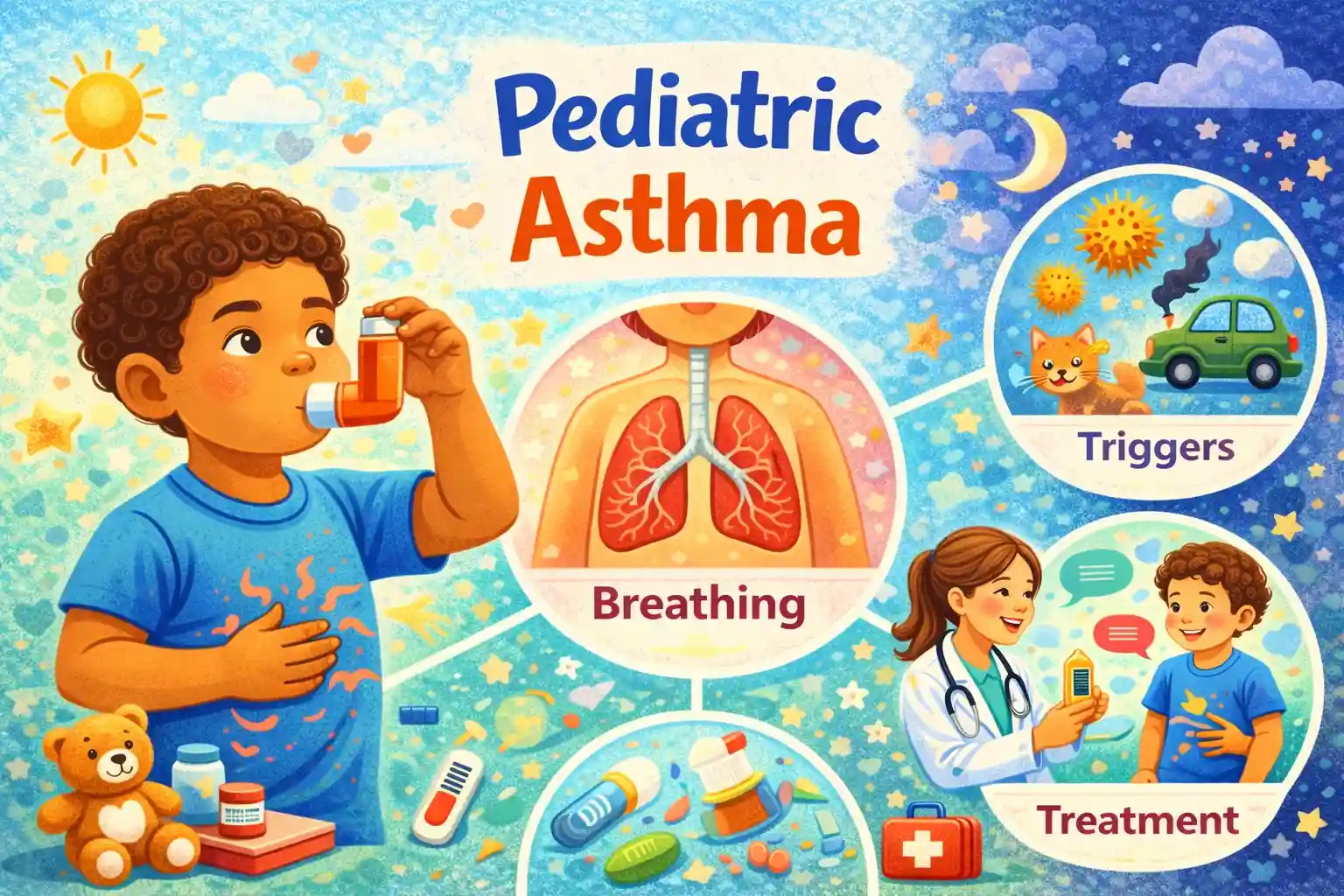
For many Spokane families, breathing problems in children can raise urgent questions and concerns. Pediatric asthma is one of the most common long-term conditions affecting children, yet it is often misunderstood or mistaken for frequent colds or seasonal allergies. Parents may notice coughing at night, shortness of breath during play, or wheezing that comes and goes. Understanding what pediatric asthma is and what causes it helps families respond early, reduce flare-ups, and know when medical care is needed. Spokane’s changing seasons, wildfire smoke, and common childhood illnesses can make symptoms worse if asthma is not recognized. Now, we explain pediatric asthma in clear terms, outline common causes, and help parents understand how asthma affects breathing so they can better support their child’s health and know when to seek pediatric or urgent care.
What Is Pediatric Asthma? Definition and Common Symptoms
Pediatric asthma is a chronic condition that affects a child’s airways, making it harder to breathe at times. In children with asthma, the airways become inflamed, narrow, and more sensitive to certain triggers. This inflammation causes extra mucus and tightening of airway muscles, which limits airflow in and out of the lungs. Common pediatric asthma symptoms include coughing, wheezing, chest tightness, and shortness of breath. Symptoms may appear during exercise, at night, or after exposure to allergens or illness. Some children cough without wheezing, which can make asthma harder to recognize. Asthma symptoms can range from mild to severe and may come and go. Early recognition helps families manage symptoms before they interfere with sleep, school, or play, especially during Spokane’s high allergy or cold seasons.
Common asthma symptoms in children
- Wheezing or whistling sound
- Persistent coughing
- Shortness of breath
- Chest tightness
What Causes Asthma in Children? Common and Less-Known Triggers
Asthma in children usually develops due to a combination of genetic factors and environmental exposure. While there is no single cause, certain triggers can increase inflammation in sensitive airways and lead to asthma symptoms. Some children are born with a higher risk due to family history, while others develop symptoms after repeated exposure to irritants or infections. Understanding what causes asthma in children helps parents reduce triggers and manage flare-ups more effectively.
In Spokane, environmental factors such as pollen, smoke, and seasonal illnesses play a role. Pediatric care focuses on identifying each child’s specific triggers so families can take steps to limit exposure and recognize symptoms early. Managing these causes is key to reducing asthma attacks and keeping children active and comfortable year-round.
Genetic and Family History Factors
Genetics play a significant role in pediatric asthma. Children with a family history of asthma, allergies, eczema, or hay fever are more likely to develop asthma themselves. This inherited risk is linked to how a child’s immune system responds to allergens and infections. Some children have immune systems that react strongly to harmless substances, leading to airway inflammation. While genetics alone do not always cause asthma, they increase sensitivity to environmental triggers.
Parents may notice early signs such as frequent wheezing or allergy symptoms in young children with a strong family history. Pediatric providers consider family medical history when evaluating breathing concerns. Understanding genetic risk helps Spokane families stay alert to symptoms and seek care early, especially if asthma or allergies run in the family.
Environmental Allergy Triggers
Environmental allergens are common asthma triggers for children. Pollen from trees, grass, and weeds can worsen symptoms during certain seasons in Spokane. Dust mites, pet dander, and mold spores inside the home can also irritate sensitive airways. Poor indoor air quality, especially in damp or poorly ventilated spaces, may increase exposure to allergens. Children with asthma often react when exposed to these triggers repeatedly.
Symptoms may include coughing, sneezing, wheezing, or trouble breathing after exposure. Pediatric care often includes identifying allergy triggers and offering guidance on reducing exposure at home and school. Simple steps like regular cleaning, air filters, and managing moisture can help lower allergen levels and reduce asthma flare-ups.
Common allergy triggers
- Pollen
- Dust mites
- Pet dander
- Mold
Irritants and Pollution
Irritants in the air can strongly affect children with asthma, even if they do not have allergies. Tobacco smoke is one of the most harmful triggers and can worsen asthma symptoms quickly. Wildfire smoke, which affects Spokane during certain seasons, can irritate airways and lead to breathing problems in children with asthma. Strong odors from cleaning products, perfumes, or chemicals may also trigger coughing or wheezing.
Outdoor air pollution can increase symptoms during high pollution days. Pediatric providers often advise families to monitor air quality and limit outdoor activity when air conditions are poor. Reducing exposure to irritants helps protect sensitive airways and lowers the risk of asthma flare-ups in children.
Respiratory Infections
Respiratory infections are a common cause of asthma symptoms in children, especially in younger age groups. Viral illnesses such as colds, RSV, and flu can inflame the airways and trigger wheezing or breathing difficulty. Some children first show asthma symptoms during or after repeated respiratory infections. These infections can cause lingering cough or shortness of breath even after other symptoms improve.
Pediatric care focuses on monitoring breathing during illness and adjusting treatment plans if asthma symptoms worsen. In Spokane, where children are exposed to viruses through school and daycare, recognizing infection-related asthma triggers is important. Early care during respiratory illness helps prevent severe flare-ups and reduces the need for emergency treatment.
How Is Pediatric Asthma Diagnosed? Tests and Evaluation
Diagnosing pediatric asthma involves careful evaluation rather than a single test. Pediatricians begin by reviewing a child’s medical history, including breathing symptoms, family history of asthma or allergies, and patterns such as nighttime coughing or exercise-related symptoms. Symptom tracking over time helps identify triggers and frequency. Physical exams focus on breathing sounds and signs of airway inflammation.
Lung function testing, such as spirometry, may be used in older children to measure airflow and response to medication. Allergy testing can help identify environmental triggers when symptoms suggest allergic asthma. Diagnosis may take time, especially in younger children. Accurate diagnosis allows pediatric providers to create an effective care plan and guide Spokane families on managing asthma safely and confidently.
Managing Asthma in Children: Treatment and Daily Care
Managing pediatric asthma focuses on keeping symptoms controlled so children can breathe comfortably, stay active, and attend school without frequent interruptions. Pediatricians often create an asthma action plan that outlines daily care, known triggers, and steps to take when symptoms worsen. These plans help parents, schools, and caregivers respond consistently. Inhalers are commonly used, including rescue inhalers for sudden symptoms and controller medications taken regularly to reduce airway inflammation.
Pediatric providers teach families proper inhaler technique, which is essential for effective treatment. Monitoring symptoms at home is also important. Parents are encouraged to track coughing, wheezing, nighttime symptoms, and activity limits. Regular follow-up helps adjust treatment as children grow. With clear guidance and daily routines, Spokane families can manage asthma successfully and reduce flare-ups over time.
Daily asthma care includes
- Following an asthma action plan
- Using medications as prescribed
- Tracking symptoms and triggers
When to Seek Urgent or Emergency Care for Asthma Symptoms
Some asthma symptoms require immediate medical attention to prevent serious breathing problems. Parents should seek urgent or emergency care if a child has severe difficulty breathing, rapid breathing, or visible pulling of the chest or neck muscles with each breath. Blue or gray lips and fingernails signal low oxygen levels and need emergency care right away. If a rescue inhaler does not improve symptoms or relief lasts only a short time, urgent evaluation is necessary.
Children who cannot speak in full sentences, appear very tired, or are unusually quiet during an asthma episode also need prompt care. In Spokane, pediatric urgent care can help with moderate flare-ups, while emergency rooms are appropriate for severe attacks. Knowing these signs helps parents act quickly and avoid dangerous delays.
Emergency warning signs
- Blue lips or face
- Severe shortness of breath
- No response to inhaler
- Extreme fatigue or confusion
How Spokane Families Can Reduce Asthma Triggers at Home
Reducing asthma triggers at home plays a major role in preventing flare-ups. Spokane families often manage seasonal triggers such as pollen in spring and summer, wildfire smoke in dry months, and cold air during winter. Monitoring local air quality and limiting outdoor activity on poor air days can help. Inside the home, improving air quality by reducing dust, controlling moisture, and avoiding strong odors supports healthier breathing. Smoke-free homes are especially important for children with asthma. Using high-quality air filters and keeping pets out of sleeping areas may also reduce symptoms. Diet and exercise matter as well, since regular activity supports lung health when asthma is well controlled. Pediatric providers help families identify specific triggers and develop practical steps to reduce exposure year-round.
Trigger reduction tips
- Watch air quality reports
- Keep indoor air clean
- Avoid smoke exposure
Frequently Asked Questions About Pediatric Asthma
Can children outgrow asthma?
Some children experience fewer asthma symptoms as they grow older, but asthma does not always fully go away. Changes in airway size, immune response, and trigger exposure can reduce symptoms over time. However, many children continue to have asthma into adulthood, even if symptoms improve during certain years. Pediatricians monitor changes closely and adjust care as needed. Families should continue following treatment plans unless advised otherwise.
Is asthma hereditary?
Asthma often runs in families, especially when there is a history of asthma, allergies, or eczema. While genetics increase risk, environmental factors also play a role. Not all children with a family history develop asthma, but awareness helps parents watch for early signs and seek care sooner.
Are inhalers safe for kids?
Yes, inhalers are safe and commonly used for children when prescribed correctly. Pediatricians choose medications based on age and symptoms. Using inhalers as directed helps control asthma and prevents serious attacks. Proper technique and regular follow-up improve safety and effectiveness.
How do I know my child is having an asthma attack?
Signs include coughing, wheezing, shortness of breath, chest tightness, and trouble speaking. Symptoms may worsen with activity or at night. If a rescue inhaler does not help or symptoms are severe, medical care is needed.
What lifestyle changes help manage asthma?
Avoiding triggers, staying active with controlled exercise, maintaining a healthy diet, and following treatment plans help manage asthma. Good sleep and stress management also support better symptom control.
Supporting Children With Asthma Through Trusted Pediatric and Urgent Care in Spokane
Living with pediatric asthma can feel stressful for families, but with the right care and support, children can lead active and healthy lives. A pediatrician plays a key role in long-term asthma management through routine monitoring, medication planning, and education for parents and caregivers. At the same time, pediatric urgent care is available when asthma symptoms flare suddenly or occur outside regular office hours. For families, knowing where to turn during breathing concerns helps reduce fear and delays in care. Spokane Pediatric Urgent Care is here to support children experiencing asthma symptoms that need prompt attention, while encouraging continued follow-up with a child’s pediatrician for ongoing management. Together, consistent pediatric care and access to urgent care help keep asthma under control and children breathing easier year-round.